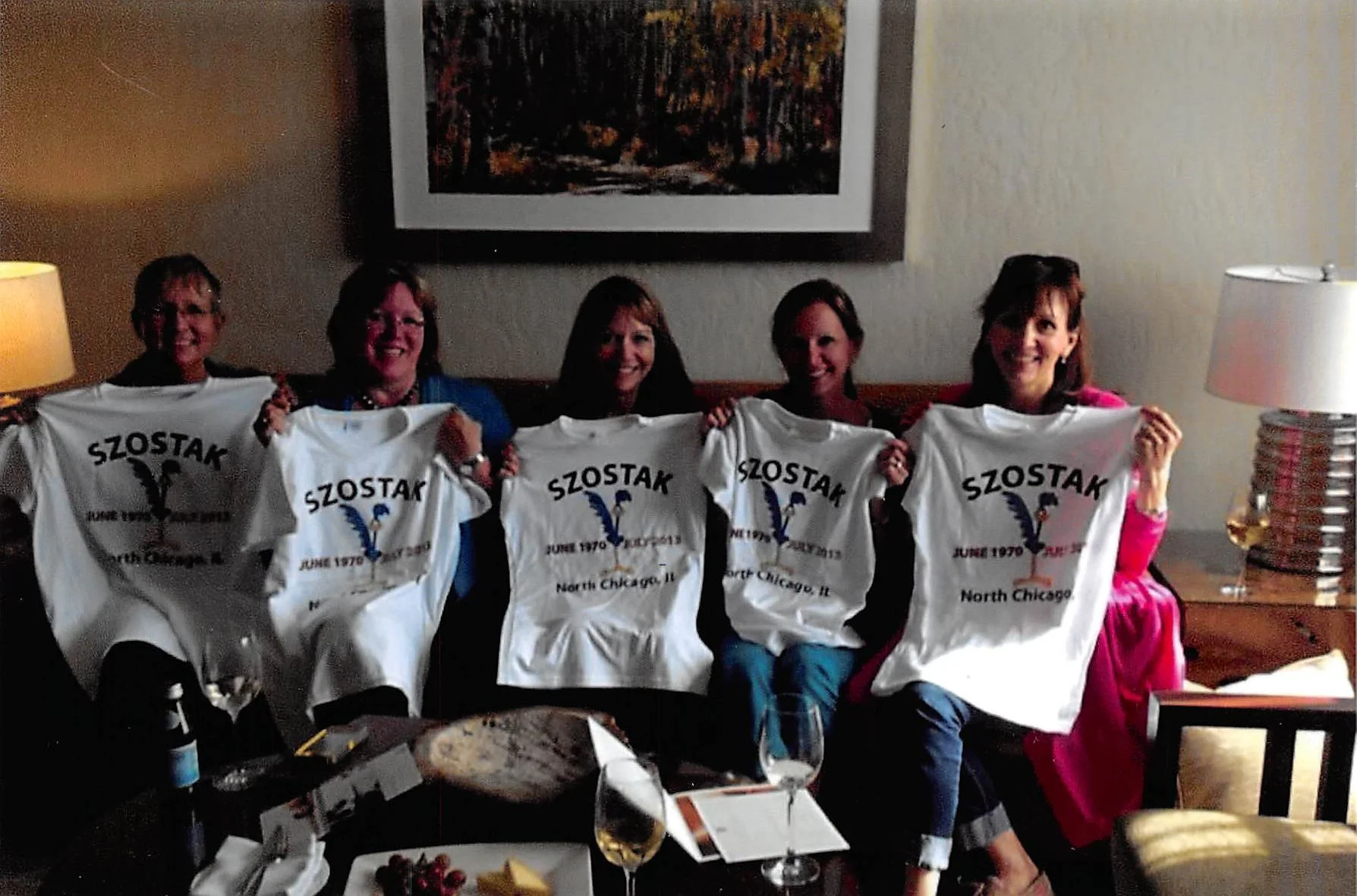
My parents often took the family on a vacation for a festive celebration, including all the spouses and grandkids. This group numbered 30 people and often wore matching T-shirts, a gift from the grandparents meant to memorialize the occasion. Pictures from the trip with everyone in similar shirts would be preserved for generations. We would spy other groups on the trip with a similar idea. Most used similar themes: the family name, the trip location, and the year of the event. Like us, some had a family/business logo or other symbol designed to foster camaraderie among family members. Although t-shirts are great, many families want to create a sense of belonging.
A Family Flag: Celebrating Values and Achievements
Using a family or business logo, you might consider designing a flag. There is an art to flag design, with each color representing an attribute. To pass along core values, this is a good opportunity to use color when deciding. Red, for instance, represents hardiness or valor; blue signifies determination, liberation, alertness, and good fortune; white symbolizes peace, purity, and harmony. A well-thought-out, well-designed flag could be used in pictures during family celebrations and milestone events. If someone climbs Mt. Everest, a picture with the family flag could inspire other members to take on their own challenge. Our family often talks about moving the flag toward achieving our BHAG (Big Hairy Ass Goal). Wouldn’t it be nice to have a flag that literally marks the achievement? Our family decided that each head of the family would have a family flag to memorialize various occasions: trips, goals, graduations, celebrations.
Meaningful Keepsakes: Symbols of Connection
Other traditions could include a piece of jewelry for a milestone birthday, graduation, or when someone joins the family, to help them feel part of the group. A bracelet, pendant, locket, or ring would be a nice keepsake. In our case, we used our family coat of arms, engraved on a wedding or college class ring for the men. We used a similar pendant for the women. Other ideas could be a watch with a meaningful engraving. My family had the saying, “The World is Yours,” which would be a very meaningful value to pass along in this way. We also had a tradition of passing along coins, which could be made into jewelry. Coins are very symbolic, which to some means good luck or to others, a message from heaven. Using this tradition can bring unity and pass values to the next generation.
Family Patterns: Weaving History and Values into Design
Scottish families used tartan to represent their clan. If you have Scottish ancestors, you can look up your family's specific tartan and use it in various formats, such as a tie, scarf, ceremonial cloak, or kilt. You get not only a meaningful design, but also a story from history. But if you don't have a link to the Scots, you can design your own. Each color could represent something similar to the flag colors. But note that actual tartans used red sparingly because it was expensive; therefore, someone wearing a tartan with a lot of red was more likely to be wealthy. A bright colored tartan might be an effort to show off one’s prominence. A dark, earth-toned tartan might be chosen to blend in with the surroundings, or to stay hidden. More importantly, designing a tartan for your family should reflect what matters to you and what you want to pass down: history, values, or a story. If a tartan design isn’t for you, you can choose fabric with your individualized design. Many websites let you create a unique fabric just for your family.
Ornaments That Tell Your Family’s Story
One of my favorite family traditions is collecting Christmas ornaments from the places we traveled. Our tree is an eclectic menagerie of 30 years of travel history with stories to share during the holidays. But another tradition is to have a gift ornament arrive in the shoes of young children on the eve of St. Nicholas. Many nationalities celebrate St. Nicholas Day on December 6, which can lead to stories about ancestors and their voyage to America. If the goal is to learn more about your family ancestry, create ornaments by miniaturizing historic pictures and put them in a mini frame with the person's name on the back. See how many family members can guess who is who in the pictures.
Family Sayings: Preserving Wisdom Across Generations
Recently, we did an exercise at our family celebration on what quotes you remember from grandparents or other family members. They ranged from silly, “Go play with bumblebees,” to more cautionary, “Be careful what you wish for,” and inspirational, “Never Give Up.” To compile them in a memorable way, you could document them in a book alongside a picture of the family member, or, if someone is a photographer, take a picture that complements the quote (e.g., bumblebees). Write the quote on a smooth rock and place it in a garden or flower bed to accumulate over time with inspiring messages. Create a memorial garden or tree line with the quote associated with the person and their birth and death dates. Preserving and passing along memorable quotes can be inspiring to family members for years to come.
Family Recipes: Passing Down More Than Food
Food tends to be comforting and can create a sense of well-being. Childhood favorites bring back nostalgic days. In our family, every Thanksgiving, my aunt hosted an elaborate banquet for the entire extended family to feast on. There was plenty of turkey, mashed potatoes, and stuffing, but our all-time favorite was the secret recipe vegetable casserole. We spent years guessing the ingredients through trial and error, with my aunt holding true to the mystery. But what if that special secret recipe died when she passed away? Her legacy as a supreme hostess would be lost to future generations. Instead, a compilation of recipes, along with pictures of family celebrations, could be a unique treasure that teaches kids the art of entertaining and the importance of traditions.
Wedding Traditions: Welcoming the Next Generation
Many weddings embrace meaningful symbols from history. One family had an Italian sword that the bride and groom used to cut their wedding cake. Other families have a “Friendship Cup” made of silver or crystal to welcome the new family member. Everyone would ceremoniously toast and pass the goblet around. We had silver candlesticks at our wedding, which were lit and then exchanged by the mother of the bride and groom after we lit a candle to represent our unity. A special engraving could go inside every ring as a symbol of something old. The ideas for old or new traditions, especially for weddings, could be endless.
Traditions That Keep a Family Strong
Using family traditions, old or new, can keep history interesting, a legacy lasting, and a family strong. Millennials no longer want our china, crystal, and silver passed down, but if done right, meaningful traditions can live on for generations. In this fast-paced, throwaway world, individual family members need to know they are part of something bigger than themselves. What traditions would you like to pass down to future generations?