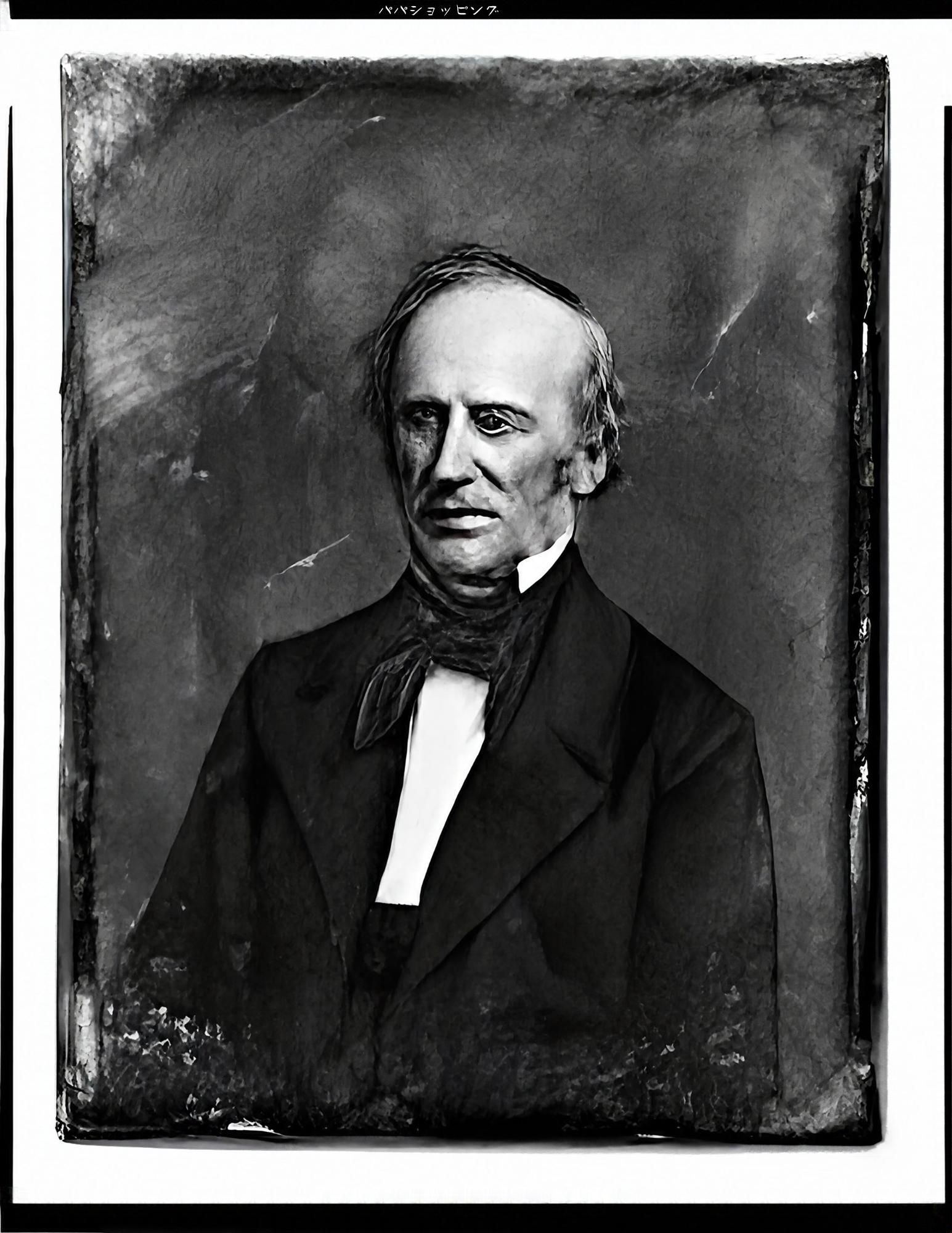
Cornelius Vanderbilt. Mathew Brady Studio. Library of Congress.
What does it truly mean to found a family? On December 6, 1877, the New York Daily Tribune called the Vanderbilt case “an impressive lesson in the folly of attempting to ‘found a family’ upon no better basis than the possession of money.” Money can preserve a legacy—but it cannot create one. Vanderbilt’s story offers a documented starting point for examining the difference between passing down a fortune and preparing a family to carry something meaningful into the future.
What He Stood For
Let’s start at the beginning to see his core values: at age eleven, Cornelius quit school, and by sixteen, he started his own business, a ferry service. Because of his energy and hard work, other captains called him “The Commodore” in jest. That drive helped him build his fortune in shipping and railroads. Although he may not have valued education early on, he showed strong perseverance.
He married Sophia Johnson and had thirteen children. She ran a business whose earnings supported her children’s daily needs and education while he built his empire. He remained loyal to his wife for fifty-four years, until her death, reflecting his integrity.
In business, he steadily broadened his reach, moving from ferries to steamboats and ocean shipping before selling his remaining ships in 1864 to devote himself to railroads. This willingness to adapt and redirect his ambitions reflected remarkable fortitude and helped define his entrepreneurial journey. His adaptability was regarded as another core value.
What He Desired
Cornelius envisioned his legacy in terms of how much he could acquire financially. The Tribune portrayed Vanderbilt as seeking permanence through an accumulated fortune. He lived modestly for a man of his means and splurged only on racehorses. His financial assets, in today's dollars, would be $ 232 billion. Vanderbilt built a fortune capable of sustaining an enterprise. The question is whether that fortune alone could sustain a family.
A Fortune Did Not Prevent a Family Dispute
Although Cornelius’s obituary asserts “his enterprise genius and success was felt world over,” his family's story was different. After his death, his family described their father as a lunatic and a slave to his passions, hardened by wealth, ruled by evil associates, and craven in his fears and superstitions, according to the New York Daily Tribune. The family fought a brutal public legal battle for a year.
During his final eight months, Cornelius lived in isolation and consulted a “spiritualist” for advice, which became the basis of the legal battle. Billy, the oldest son and beneficiary of the vast estate, was accused of manipulating his father through the spiritualist. He was alleged to have convinced Cornelius to leave his money in the hands of his trusted son, whom he had once called an idiot early in life. Although Billy won the case, he settled out of court with his siblings—the damage was already done.
Headlines He Didn’t Foresee
The publicity exposed the Vanderbilt family’s private divisions and challenged the dignified image presented after Cornelius’s death. His reputation became a subject of public attack. Although it was not based on fact, people questioned his values as the papers portrayed him as crazy and evil. The family became a spectacle as their grievances became public.
The railroad directors’ eulogy celebrated Vanderbilt’s achievements and expressed confidence in his successors. By contrast, the newspaper portrayed a family publicly divided over the fortune. Readers encountered sharply different accounts of what he had left behind.
One lesson stands out: a person’s commercial reputation and a family’s experience of inheritance can tell starkly different stories about the same legacy. This may give you pause as to what legacy you will leave behind.
The Fuller Story
Money can be a legacy tool, not a purpose. Vanderbilt’s $1 million founding gift helped establish Vanderbilt University. His second wife, Frank Armstrong Crawford, encouraged the donation because education was her core value. Cornelius valued perseverance, integrity, and adaptability, and hoped to be remembered for those strengths. He thought the university would be part of his legacy; the public family dispute tainted his reputation, leaving a story he never intended. We don’t know for sure whether he coveted money for its own sake, but that's the story in the history books now. Do you know how your legacy will be written?
What is Founding a Family?
Building a Founding Family isn’t about money. Money alone does not sustain a legacy. Its lasting significance lies in what it enables people to become and contribute. The rising generation needs to be equipped to be stewards, not inheritors. Having difficult conversations now can reduce the chances of your legacy going sideways once you are gone. When you plan your estate, prepare your descendants not just for one generation, but for a lasting legacy for 100 or 250 years.
"Legacy is not leaving something for people. It's leaving something in people.– Peter Strople
Vanderbilt's failed attempt to build a family legacy on money alone offers a powerful lesson: financial wealth can preserve a legacy, but it cannot create one.
Questions for Today’s Families
In my book, Prosperous Matriarch, I reflect on stories like the Vanderbilts and the lessons we can learn from them. I share famous stories and my own to help other families navigate their legacy journey. Each section about family governance has a chapter on how to implement it with the rising generation. Here is an example of some of the questions to contemplate:
What values do we demonstrate through our decisions?
How are we preparing family members for stewardship?
What connects us beyond shared assets?
How do we discuss differing expectations before they become disputes?
What knowledge, traditions, faith, and service do we want future generations to carry forward?