
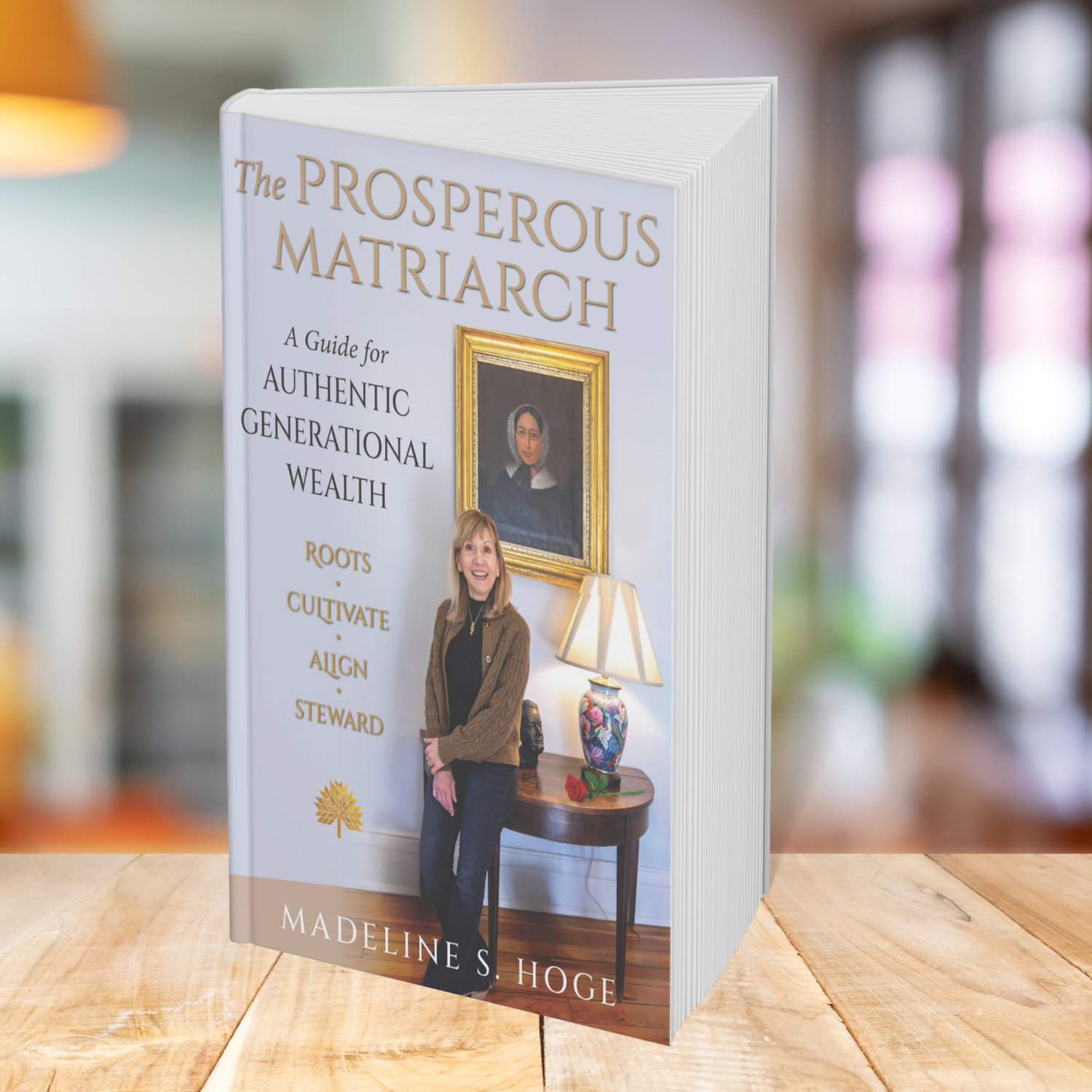
 Image 1 of 2
 Image 2 of 2
Book coming in January 2027. Preorder today: Prosperous Matriarch.
This book redefines generational wealth. More than financial capital, Madeline Hoge emphasizes the stewardship of family, meaning, and values: while wealth is inheritable, purpose must be actively cultivated, modeled, and sustained; without it, even vast fortunes can fade.
Drawing on personal experience, the author grew up in a multi-generational family business that failed to survive beyond the fourth generation, a result not only of business choices but also of a lack of thoughtful succession planning. Since then, she has dedicated her career to helping families preserve their legacies. Her expertise in family governance, succession, and consulting work advocates a fresh model of stewardship.
The book highlights a key truth: losing a matriarch often means losing family cohesion and clarity. Through her experience with grief and family fragmentation, the author illustrates how even strong families can unravel without intentional structures replacing invisible leadership with shared governance, education, and communication.
This fresh framework positions the matriarch as a legacy leader, a role that can be taught, shared, and sustained across generations. Shifting the focus from inheritance to stewardship, Madeline urges matriarchs to prepare the next generation with a growth mindset, discipline, and purpose to carry both wealth and meaning.